I’m Going to Found A School
Not right now, obviously, but one day.

I’ve been twenty years old for a few days now, and I have to say, I feel like I have some strange clarity about the future.
Everything is moving forward. I’m graduating from Deep Springs. I’m going from what I’ve been calling my “college situation”—these bizarre, exhausting, exhilarating two years in the desert—to “proper college.” I’m finally getting my driver’s license. (I know, I know, there just hasn’t been a good time!)
And I’ve been thinking a lot about this school, the one I’m going to start. I’ve been having all these conversations with faculty and friends and family. It’s the thing that keeps coming up at the dinner table.
My sales pitch? It will be where the spirit of the yeshiva and Augustine’s idea of friendship converge! It will be a refectory for the brilliant but unemployed, for the teachers on the periphery of the academy; for the students who actively choose to learn how to read and write in a world where those skills are considered optional or superfluous.
It will be like Deep Springs but less democratic, I tell people. Socialism takes up too many evenings. There will be good food, clean air, demanding classes, time to read and write and learn practical skills.
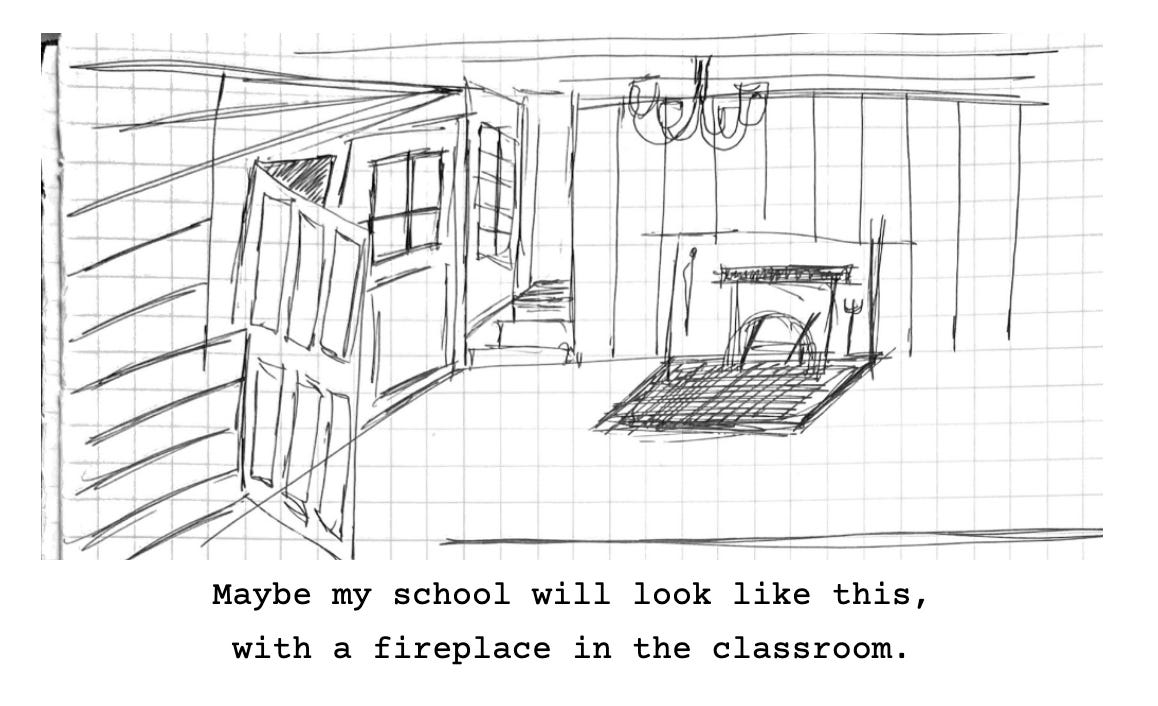
My school will be an alternative but not for the sake of being an alternative. There must be something more substantive to it. I will try to explain what that mysterious “substance” is: what does this kind of education offer on its own terms?
Well, what I want to do is work with whole books, not parts of them, not excerpts or summaries or things people said about them (with rare exceptions).
Right now, for example, I’m trying to understand Ovid—to see him in as many ways as possible. Through reading and talking, drawing his word-pictures, making up poems about his characters, translating him, retelling his stories to a live audience. It is very exciting work to me, and it is the kind of work I’d want my students to be doing—when the hardest thing you’re doing is not required, when you seek out something to struggle with for pure enjoyment.
A couple of months ago I wrote to you from the beach about living a life of leadership and service to humanity—the sweeping injunction for graduates of Deep Springs.
For me, how to lead a life of service is tied up with a question I posed in my Deep Springs application: How can I be academic without being an academic?
I show significant signs of being an intellectual. The doctors say Intellectualism is indicated. The symptoms I present all seem to match. Pain or pressure in the chest when someone says “just skim the reading.” Vasodilation and heightened heart rate when talking about Kierkegaard. Carpal tunnel triggered by overzealous annotation. While the symptoms are manageable, they tell me, Intellectualism isn’t curable.
It seems like I have two options after this diagnosis. I can take the ultra-scholarly Sitzfleisch route, hole up in libraries, produce monographs, teach at a university that pairs good schooling with the smell of cold stone, become a sort of Casaubon—but with luck not so dead from the waist down. Alternatively, I could become what they call a “public intellectual,” available and in circulation: host a podcast, write a popular book, become a brand, make appearances and rack up invitations.
These are the extremes, of course. Neither is entirely appealing to me, nor do I think they allow for the life of service I think I am best suited to offer.
I want to be a man of letters. Okay, I am not a man and I do not have a disposable income, so that complicates things a bit. A man of letters is someone whose life and livelihood are bound up with literature. A critic, but almost always more than a critic—an essayist, a journalist (but not for a daily), a sometime novelist or poet, a speech giver. A man of letters has a job and a vocation, and a small loyal audience. The man of letters cultivates in her audience the serious interest in serious literature which her writing requires in an audience. She designs her own relevance.
Now, a Jewish man of letters (an intellectual of the Bellow-Bloom kind) has a wide range of literary interests—she has deep knowledge of the classics as well as more contemporary works of literature, and 80s movies, and the lives of obscure actors and artists—but she is devoted above all to what I’ll call “Jewish modes of transmission.” That is, the at times painfully close reading of texts, the proliferation of questions and meanings, the treatment of language as a sacred medium for connection, the idea of dialogic partnership to achieve wisdom—keeping questions open when they could be smoothed over, rebuking and reassuring, preserving the dignity of doubt.
Listening to a man of letters speak recently, I heard that this life might actually be possible. He writes intellectual biographies for a living, and sets up his desk in Jerusalem or Vienna. One of many interesting things this man of letters had to say was an anecdote about his friend, a lecturer at a German university. She was giving a public talk and asked him to look over the speech. It was so subtle, so textual. It had too much close reading for an audience who would listen instead of read, he said. His colleague’s reply was that she increasingly values the overcomplicated. The talk’s apparent overelaboration and imperfection actually testify to its authenticity, its human quality. He was convinced. Such attention to detail in a text, such imperfect imaginative invention, he said, can’t be machine generated. The impurity shows whether the diamond is natural or lab grown.
So what I want to do with my life is read and write and talk in a way that helps us hear (shema) new ideas when regurgitations and platitudes abound, when people are confusing human work for machine work—as thoughts become just as metalled as our metalled world. Jewishness is for me about an attention to language rather than doctrine, a kind of solemnity that is not self-seriousness but earnestness. With very little strictly Jewish education, I feel like my recent attention to what I’m calling “Jewish modes of transmission” has changed the way I see things and see how other people see things.
Jewish modes of transmission have something to do with the feeling of being marginal. Lately when people talk about being marginal they mean oppressed. That connotation doesn’t interest me. I mean rather what my professor’s old history school teacher means when he paraphrases Isaac Deutscher: being marginal just means being able to see society for what it is because you’re not embedded in it. For that reason, being marginal is really being at the center, being inside by being outside, looking at the center from your own center.
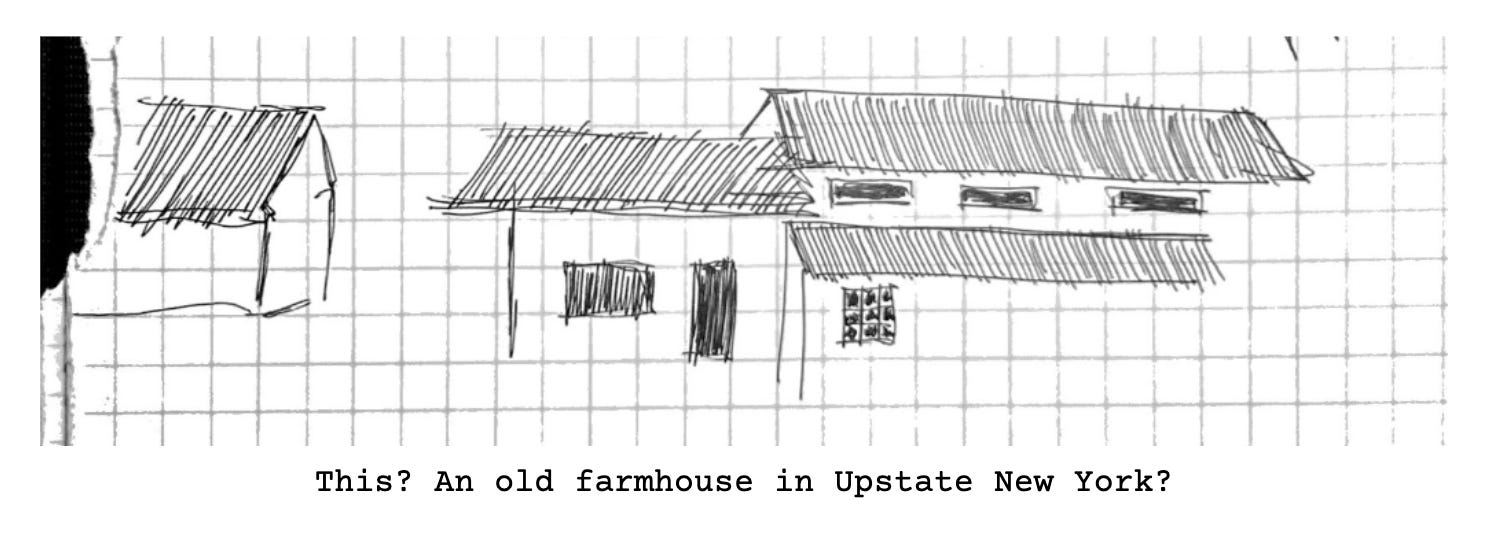
I love marginality. I wrote about this feeling a year ago. “I’ve been thinking about my mom’s life a lot. It’s a life I deem to be of service to humanity, but more importantly, to humans. I’ve been thinking about what it would mean to live a life of service. On the plane today, in the back inside-cover of my copy of Bellow’s Herzog, I wrote: ‘A life lived in the margins of books: You give yourself away in that inch between the text and the page’s edge. Marginal doesn’t necessarily mean small or unimportant. Marginalia is framing, intimate, conversational. It is time-keeping and time-capturing better than any journal of events. Marginalia is preserved reactions in real time to the most moving, disturbing, perplexing, insightful moments of a text. It is not meant for public viewership but when one does happen upon the vestiges of life lived in books it becomes a conversation.’”
(I would normally be ashamed of quoting myself but I think it’s appropriate here, since I’m talking about layered intergenerational texts, commentary on the commentary!)
So what if I told you a life of service is a life in which you see things in a particular way? A life of service is not a career, but an attitude. I will never be one thing. No one will. I think it’s true that at Deep Springs we don’t admire alumni because of what they’ve done but because of how they look at things. We don’t admire the guy who spent his life doing important red blood cell research because at the reunion he gravely condescended to his classmate who was a kindergarten teacher. We admire Graeme Wood because he was attentive to our questions, spoke carefully, and continued conversations with people who raised valid objections to his work, not because he’s a first-string reporter at The Atlantic.
One of my good friends said recently that I should try to convince other people of my moral convictions more often, instead of just cultivating them for myself and letting people think their own thoughts. Here we go. I believe that the life of the mind is operative, active, and ethical. I do not believe a life so lived is the lazy or easy option when grittier, more “practical” jobs abound.
As a man of letters I get my definitions of service from a wide range of literature. From the back of the VHS of It’s A Wonderful Life, for instance. “Frank Capra focused on the key summarizing thought: That every man’s life is important because it touches so many other lives.” From Saul Bellow’s Nobel in literature acceptance speech. “Books continue to be written and read,” he says. “It may be more difficult to reach the whirling mind of a modern reader but it is possible to cut through the noise and reach the quiet zone. In the quiet zone we may find that he is devoutly waiting for us.” From my classmates, who say that a life of service is teaching, adopting kids, going into politics. From the random preface to Tennyson’s poems, a man “living in his utterances” while not filling pages of history books. Interpretations of service abound and I vote we should just keep reading them and talking about them and not holding ourselves to any one vision.
A lifetime of talking about books with my friends—that’s what I’m after. If you’re not talking to your friends about your books, you’re not really reading. And if you’re not reading books with your friends, you don’t really have friends. The Greeks gave us the ideas of philosophy and friendship, and I’d argue the Jews showed us what that means in practice. A study partner is a friend, an interlocutor, a teacher.

Spending my life “preserving Jewish modes of transmission” sounds obscure, but it has very practical implications. To me it looks like starting a school. Not a building, or a booklist, much less a mission statement geared to bring in wealthy donors. It looks like reimporting into the university what the universities have consciously or unconsciously driven out—what the Greeks and the Jews knew was essential to learning, and that is friendship.
What works about education as we know it? What doesn’t? Take this provocative proposition: “the seminar fails as an educational model.” Something I’ve been thinking about. The seminar relies on discussion as opposed to writing, and that discussion can be deadening when it becomes a performative back and forth. Students can come to class having “done” the reading and never having read. It is not the thing you do alone early in the morning or late at night with a friend. It’s that joyous and deep pre-seminar thing—that’s the ticket. Perhaps the darling practice that elite institutions rave and pant over just isn’t working. For me it will be fun as well as serviceable to propose fundamental changes to something as old as a university education.
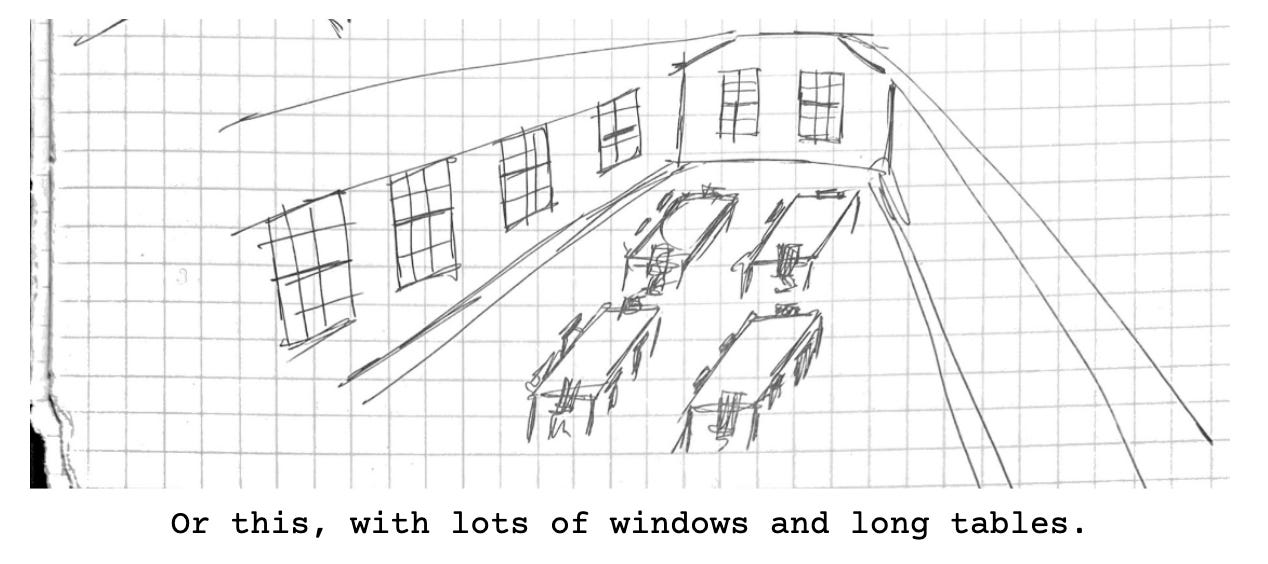
In the Jewish house of study, the arguments of hundreds of pairs of study partners build to a deafening cacophony. Everyone around you is conversing, loudly, about the same text but everyone is saying different things. And what they’re congenially arguing over are in fact the preserved arguments of hundreds of generations of arguers, the carefully recorded multiplicity of approaches to a single source. These studying friends provoke and joke in the same breath, laughing and meditating. The yeshiva is supposed to be a place where ideas come and go, questions and answers are raised and forgotten, where teachers are expected not to repeat their old teachings but to innovate.
This will be our model. I say “our” because I hope you’ll join me when I am ready to really start it one day. I hope you’ll help me build it. I plan to do the plumbing myself.