In his chapter about reading, fitly named “Reading,” Thoreau doesn’t seem to be doing much reading. Here Stanley Cavell would probably make a distinction between the writer of Walden and the writer in Walden: more precisely, the writer of Walden makes some confusing remarks about the writer in Walden which need parsing.
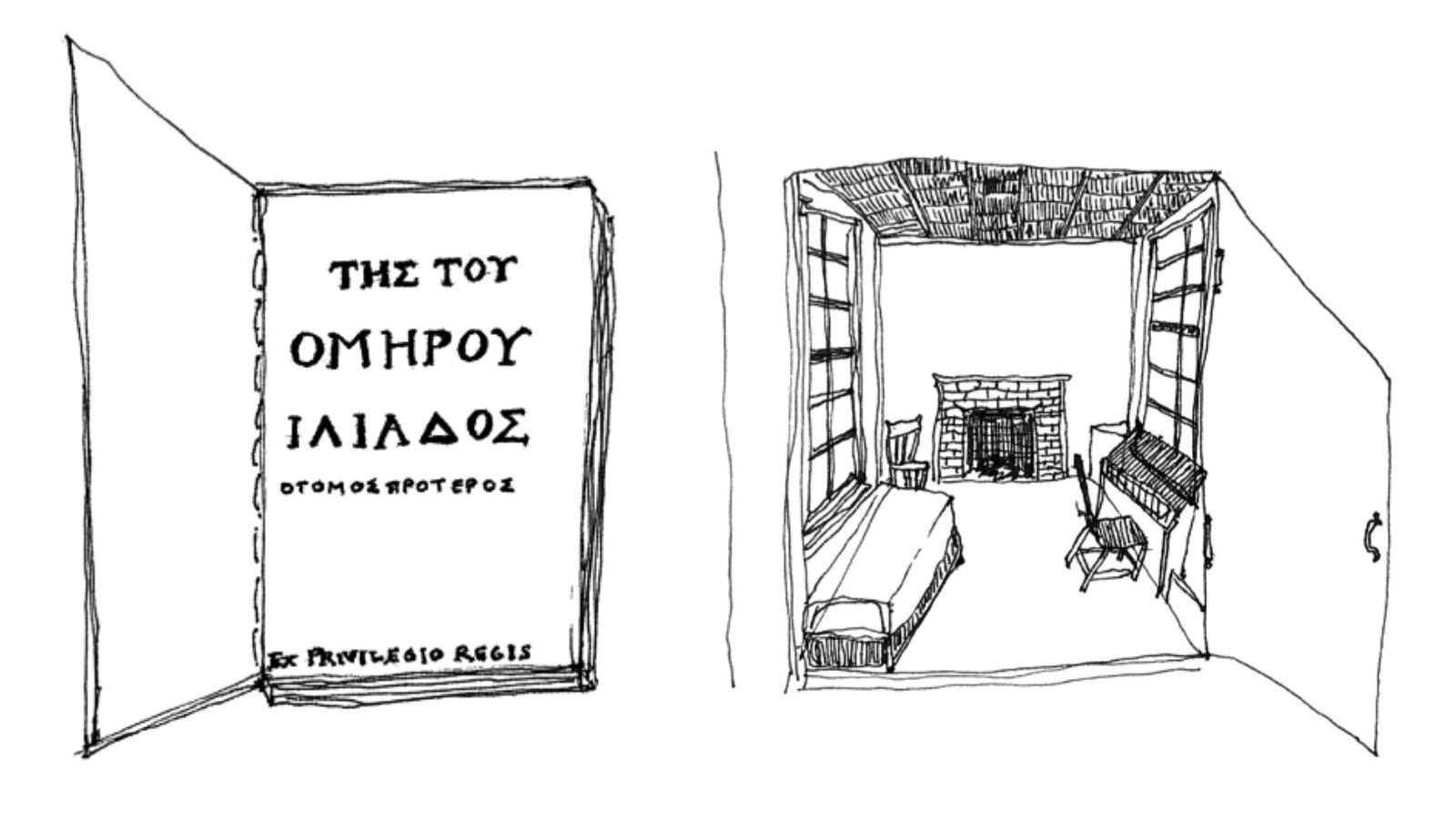
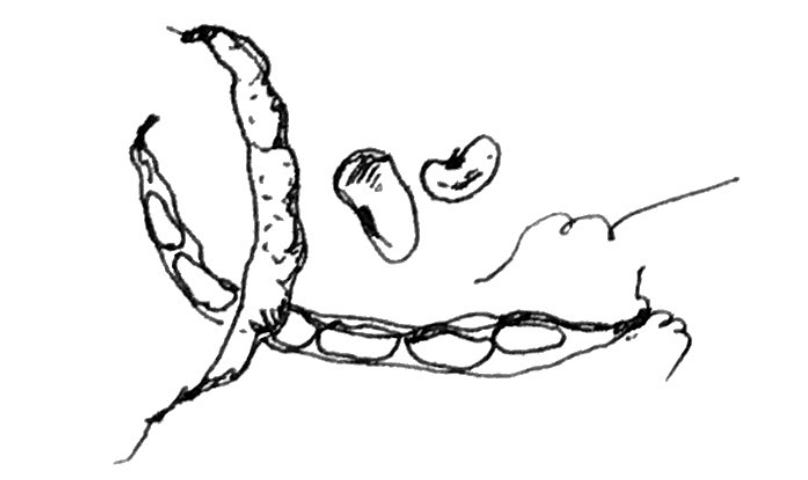
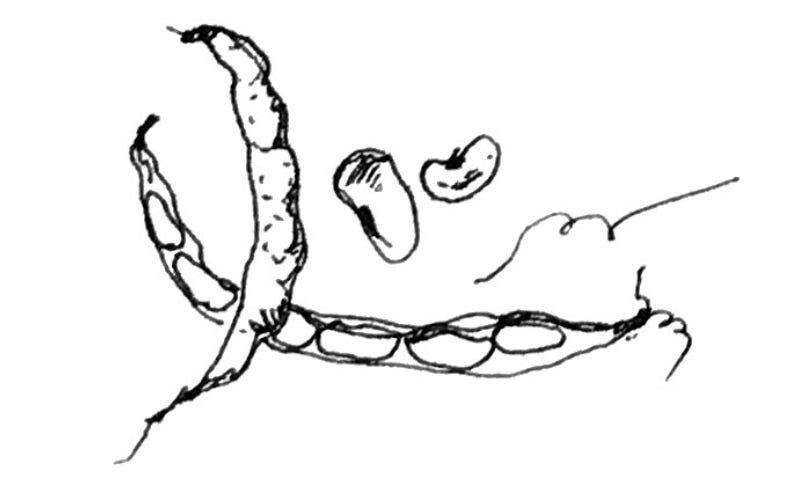
I kept Homer's Iliad on my table through the summer, though I looked at his page only now and then. Incessant labor with my hands, at first, for I had my house to finish and my beans to hoe at the same time, made more study impossible.
This is the “book’s low myth of the reader,” as Cavell puts it. How could having the book on your bedside table and turning the pages constitute study? But when Cavell rehearses Thoreau’s funny “fabliau”—a mini fable of the reading life—he leaves out the sentence that comes immediately after. I think it just might be crucial to understanding Thoreau’s aims as an esoteric writer, aligning himself with the ancients, not simply presenting general truths.
Yet I sustained myself by the prospect of such reading in future. I read one or two shallow books of travel in the intervals of my work, till that employment made me ashamed of myself, and I asked where it was then that I lived.
Upon closer inspection: Thoreau’s bean-hoeing makes study impossible—but only “at first.” He does not sustain himself by the domestic pleasures of farming but “by the prospect of such reading in future.” Many readers would take Thoreau’s realization that he must focus on the place where he lives now instead of reading of foreign locales to be the beginning of his attempts to commune with nature, discover the beauties of Walden pond, see the sights and hear the sounds—which is almost right. It’s actually that he realizes he must write. He must commune with words, discover the beauties of Walden on the page, make his readers see the sights and hear the sounds.
So maybe his incessant hoeing of beans, delicate basket weaving, and hours of watching bread rising on the coals are all governing metaphors of writing: the repetition and physical strain, the crafty art of building sentences, and the patience required to see the work through from dough to steaming loaf. Cavell suggests so. “Writing is a labor of the hands”—and yields an instant and immeasurable crop.
When Thoreau goes so far as to compare the scraps of newspaper he uses for a seat, tablecloth, or fish-wrapping to the Iliad (in that they afford equal entertainment and answer the same purpose) we should know he’s up to something. He is a classical scholar! So what is he really saying? As Cavell writes in The Senses of Walden:
If you do not know what reading can be, you might as well use the pages of the Iliad for the purpose for which newspaper is used after a meal in the woods. If, however, you are prepared to read, then a fragment of newspaper, discovered words, are sufficient promptings, bespeaking distant and kindred lives and deaths. The events in a newspaper, our current lives, are epic, and point morals, if we know how to interpret them. The words of the Iliad should come to us as immediately as election results or rumors of war.
Okay, so Thoreau’s saying lots of different things at once which Cavell helps us come to. One. Thoreau knows what reading can be and thus does not use the pages of the Iliad to dry his hands. Two. Because he is a reader and a writer words naturally have fascination to him and whole worlds can be imagined from meager promptings. Three. By saying that the newspaper affords as much entertainment as the Iliad he is saying that the Iliad is as contemporary and worthy of attention, as lively and personal, as any front page story.
Here’s a fun coincidence. About a week before I started reading Walden my dear Latin teacher and I started reading—wait for it—the Iliad. My Greek is incompetent so we’re reading Richmond Lattimore’s translation aloud, alternating passages. (The joy of reading out loud with an excellent reader who is so knowledgeable!) Because Lattimore is not worried about updating it or making it ‘accessible’ or ‘relatable,’ two of my least favorite words for assessing value, he has achieved something Greek in English.
It’s gruesome—“he struck the middle of his neck / with a sweep of the sword, and slashed clean through both tendons, / and Dolon’s head still speaking dropped in the dust.” It’s archaic— “‘And let us gather and pile one single mound on the corpse-pyre / indiscriminately from the plain, and build fast upon it / towered ramparts, to be a defence of ourselves and our vessels.’” It’s repetitive, and doesn’t shy away from Homer’s steady epithets.
A translation of the Iliad has to be more than “inviting to modern readers,” as Graeme Wood writes in The Atlantic. It has to be visceral, in the true sense of the word. The fact that we have intestines, a source of life which can be speared out, or blood that can run in dark rivulets around clattering armor, means that we are mortal and that this story should matter to us. Bodies can endure so much, but life can be so quickly taken away.
But “Homer has never yet been printed in English,” Thoreau baldly states. I was shocked until I realized he wasn’t being literal. (He quotes from Chapman’s 17th century translations after all!) Once it is English, he maintains, it is no longer Homer. He does not mean that we should not bother to read the Homeric epics if we have no recourse to their ancient tongue, only that it is hardly a waste of time to devote “youthful days and costly hours” to learning “only some” ancient words, because they will bring one nearer to the heroic writers.
“Those who have not learned to read the ancient classics in the language in which they were written must have a very imperfect knowledge of the history of the human race,” according to Thoreau. And he reminds us that the very people who speak of disposing of the ancient writers—dismantling and divesting Classics departments, or discouraging students from studying classics in schools—are the very same people who haven’t bothered to read them: “They only talk of forgetting them who never knew them.” If they had laboriously sought “the meaning of each word and line” they would never dream of willfully neglecting the rare, curious, and noble thoughts of antiquity.
For any and every student, those just starting to read seriously and those well-practiced, Thoreau’s chapter on “Reading” is essential. It’s a short commitment, compared to the rest of Walden. I dated a new era in my life from the reading of this book, and this chapter especially. My mom used to have students read it as the first assignment in almost every college course she taught, a grounding and shaping force for any number of disciplines.
For anyone with an interest in classics, turn to pages 104 - 108 (in this edition) for the world’s best defense of learning ancient languages and dedicating lives to endeavoring to read these books as “deliberately and reservedly as they were written.” What about pre-med, Ruby? Or law? Nope! I won’t defend myself—I’ll just quote Thoreau. Click below to hear me read these pages from Walden.
Also, happy Mother’s Day (a day late) to the moms reading this! My mom is the most important person in my life and always will be. (Read, from back in November, my ode to mom.)